
The Fight-Flight-Freeze Bedroom: Why Sexless Marriages Become Emotional Battlefields
/
In short:
Repeated cycles of rejection, pressure, avoidance, disappointment, and unresolved hurt train the nervous system to experience intimacy as emotionally unsafe.
Couples begin reacting with fight, flight, or freeze responses well before intimacy conversations or physical touch even happen.
Over time, the bedroom becomes emotionally charged and couples get trapped in negative cycles that deepen emotional disconnection.
Estimated reading time: 16 minutes
Many dead bedrooms don’t begin with lack of love. They begin with repeated cycles of hurt, disappointment, pressure, and emotional disconnection around sex, sexual desire or frequency of sex.
After years of working with couples in sexless marriages, I’ve found that most couples are not dealing with a sex problem alone — they are trapped in nervous system and attachment cycles they do not yet understand or even aware of.
One couple I worked with described it as getting stuck in the “disappointment vortex.”
Every few weeks, newly married couple Naomi and Leon would find themselves back in the exact same painful place. Sex would take effort and investment on both of their parts: him overriding his fear of failure and yet another disappointment and her overriding her sense of not being met. Naturally sex would yield in a disappointment, feeding the vortex of disappointment and distance.
And somehow they would end up in this cycle over and over again.
Another couple described their seemingly unsolvable dynamic this way:
“Greg felt rejected, and I felt like a failure.”
Married for more than 20 years, Shannon and Greg loved each other deeply. They respected each other. And they genuinely enjoyed each other.
And yet, no matter how hard they tried, they kept landing in the same painful place around sex. He would hit a breaking point after weeks of feeling alone and unwanted. She would feel like she was constantly trying to meet expectations she could never quite satisfy. She walked on eggshells, always waiting for the moment things would “tip.”
They were exhausted from spinning their wheels, yet somehow they would end up in the same cycle.
Then there was Sandra and Bill, a couple on the brink of divorce after years of emotional disconnection and a near-sexless marriage. Sandra would retreat into what she called her “turtle shell,” while Bill would vent, push, and pursue connection in ways that left both of them overwhelmed and disconnected.
They battled with this cycle for over a decade.
Why Sexless Marriages Become Emotional Battlefields
Like these three couples, most couples trapped in these cycles are actually good partners. They are loving, loyal, responsible, devoted parents and teammates.
Which is exactly why the disconnection becomes so confusing and heartbreaking.
“We’re good everywhere else… so why does sex feel so impossible?”
This happens because couples get caught in what psychologists call negative cycles. In this case, it happens around some aspect of sex, and often around low desire and frequency of sex.
And these negative cycles are powerful.
When these cycles of predictable behavior, words and actions happen over and over again, we begin to feel helpless in the face of them. These gridlocks take on a life of their own, where an established cycle only needs a trigger to bring you back into the same familiar drama again and again.
A comment.
A sigh.
An initiation.
A rejection.
A look.
A few weeks without sex.
And suddenly the whole thing explodes.
This article is for you if…
you keep having the same painful conversations about sex
one of you pursues while the other shuts down
touch has started feeling loaded with pressure
you avoid talking about intimacy because it usually goes badly (or very badly)
resentment around sex is spilling into the rest of the relationship
you love each other but no longer feel emotionally safe together
you feel lonely lying next to your partner
When we think of negative cycles, the infinity loop comes to mind. When caught in these never-ending argument and acting out cycles, it’s rarely because one person did one thing that had a singular impact on the other. There is an ongoing loop of perceptions, reactions, assumptions, comments, protective behaviors, and interpretations — some visible, some happening quietly underneath the surface that couples never realize they don — unfolding between two people trying to find connection while also protecting themselves from hurt.
Over time, the cycle begins to take on a life of its own. The dead bedroom also becomes the fight-flight-freeze bedroom, a battleground.
What Is a Fight-Flight-Freeze Bedroom?
A fight-flight-freeze bedroom is a relationship dynamic where repeated cycles of hurt, rejection, pressure, avoidance, or conflict around sex train the nervous system to experience intimacy as emotionally unsafe.
Over time, couples begin reacting protectively before intimacy conversations or physical connection even happen.
And with every new round, it wreaks more havoc on the nervous systems of both partners.
Many couples try to solve this by talking more about sex. Or fighting harder for their perspective. Or pushing themselves to “work on it.”
But instead of creating connection, they leave those conversations feeling more hurt, more guarded, and more hopeless.
Because underneath it all, something deeper is happening.
With every painful round, your nervous system begins learning to associate:
the topic of sex
initiation
touch
vulnerability
intimacy conversations
even the bedroom itself
…with threat.
And once that happens, the bedroom — and all it represents — becomes a battleground.
Couples experiencing a dead bedroom become trapped in a pursuer-withdrawer dynamic. One partner pursues sex and connection while the other withdraws to avoid pressure, conflict, or shame.
The thing that makes this so sticky is that it has a nervous system component that most people (or couples therapists) are not aware of.
The nervous system braces before the conversation even begins. Your body reacts before your mind catches up.
The physiological reaction (such as increased heart rate, a nauseating feeling in the stomach, enlarged pupils, fight in arms, flight in legs, or blurry vision) comes on as quickly as 1/100th of the time it takes for the emotional reaction to form. And as much as 1/1000th of the time it takes our brain to comprehend what is happening, if it is possible at all.
Your actions and behavior take form before you are able to think about it in a calm matter. You are no longer meeting each other freshly in the moment; you are reacting from accumulated hurt, fear, resentment, shame, loneliness, and disappointment.
Protection takes over long before playfulness, openness, or eroticism have a chance to emerge.
And every communication about sex, every interaction or initiation, they all become fraught with a sense of threat. The bedroom becomes a battlefield.

Why the Nervous System Turns a Sexless Marriage Into a Threat
Most couples caught in these cycles believe something is fundamentally wrong with them or their relationship.
But negative cycles are not signs that you or your relationship are broken.
They are predictable nervous system adaptations to repeated hurt, disconnection, pressure, disappointment, and failed repair attempts.
Here is why this happens.
Whether you’re discussing sex or what you liked about the movie you just saw, whether you’re engaging in light banter with laughter or heatedly advocating your position, your nervous system — which is an involuntary system of nerves that run between the brain stem and your most important functions, such as breath, digestion and blood flow, through the spinal cord — is constantly asking one essential question: “Am I safe?”
That is the entire purpose of this primitive part of us — to help us survive.
And it is listening, watching and sensing everything that’s happening around us and to us.
Messages relayed with kindness and patience send us the message of safety; messages with edge signal that we might be in danger.
Messages that relay the point that you are important to your partner tell you that you’re safe; when your needs are dismissed or ignored, you get the message of danger.
When we are provided space to be ourselves, without humiliation, harsh criticism or shaming, we feel safe. When the opposite, we feel unsafe to exist.
Whatever our communication, we’re constantly sending either a negative or affirmative answer to each other:
Am I safe with you?
Am I important to you?
Can I be myself with you?
Despite our ability to talk ourselves out of the seriousness of how we feel, our nervous system detects and registers emotional danger just as much as danger from a deadly snake or a lion. And its attention to detail is exquisite — the nervous system is wired to detect the slightest movement or change to signal danger. Because your life depends on it.
In a couple with repeated cycles of disappointment and hurt, the nervous system expects a “No” to all these questions. It will watch out for danger at every turn.
Your Nervous System Is Trying to Protect You
Criticism, withdrawal, shutdown, avoidance, overexplaining, pursuing, defensiveness, numbness — these are not random behaviors.
They are protective strategies.
Your nervous system learned them because at some point they helped you survive emotional pain, rejection, pressure, shame, or helplessness.
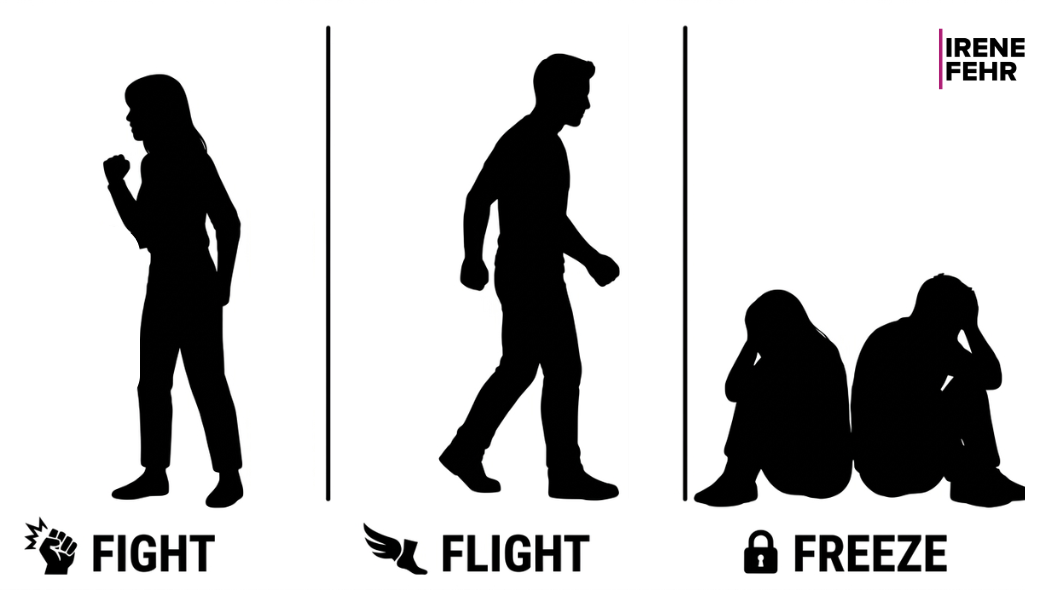
The problem is that the very strategies protecting you are now keeping intimacy from happening.
Which is it is so critical to understand your own response stance — and that of your partner. The more you can become aware of your behavior and what is the vulnerable “ouch” underneath, the more you can short-circuit the painful negative cycle and get to the emotional heart of things.
Can you recognize yourself in these?
The Fight Partner (Pursuer)
For some people, the nervous system instantaneously goes into fight.
These are people who:
argue repeatedly about sex
criticize their partner
keep score
demand reassurance
escalate quickly
raise their voice and enumerate details of past hurts
Underneath the anger is something far more vulnerable: panic, desperation, and grief.
“Why do I feel so alone in this relationship?”
“Why do I have to fight to matter to you?”
“Will I ever feel wanted again?”
“Do you even see how much this hurts me?”
“Am I too much for needing this?”
Once the nervous system activates, the Fight partner stops speaking from vulnerability and starts speaking from protection — and protection rarely creates intimacy or closeness.
The Flight Partner (Avoider)
Other people move into flight upon threat.
They stop bringing up sex altogether because the topic feels too loaded.
They withdraw or retreat:
Choose to stay busy to avoid having to face each other or the topic
Pour themselves into parenting, work, or distractions and often overwork
Scroll endlessly at night
Avoid physical touch
Go to bed at different times to avoid physical contact
They begin to organize themselves around fleeing or avoiding facing the situation, topic and/or each other.
They unconsciously arrive at the conclusion:
“If we don’t talk about it, at least we won’t fight.”
However long-term avoidance doesn’t create safety. It creates distance. And in the distance, even more hurt feelings. It all perpetuates the negative cycle — and thus the threat — because important topics do not get addressed and hurts do not get repaired.
Eventually, that distance becomes its own deadly cycle, precipitating the death of the relationship itself.
Underneath the withdrawing is always something far more vulnerable: often overwhelm, inadequacy, and fear of failing.
“Why does it feel like I can never get this right?”
“How do I stay connected without disappointing you?”
“What if I don’t have what you need?”
“Why does every conversation feel like pressure?”
“Can I be loved without having to perform?”
The Freeze Partner (Avoider +)
Then there’s the freeze response.
Freeze is what happens when the nervous system becomes overwhelmed and shuts down to survive.
Some people visibly freeze: blank stare, confusion, inability to speak, going numb.
Others freeze while staying highly functional: disappearing into work, routines, productivity, or caretaking while emotionally disconnecting from themselves and their partner.
Some of the ways that someone in freeze might show up in intimacy is:
dissociation during sex
going through the motions
feeling numb
mentally leaving during touch
inability to access desire or low desire
inability to respond when partner initiates
Beneath the frozen facade is deep activation, nervous system overwhelm and ultimately helplessness and collapse. It is a state of utter panic and immobilization, even if externally it looks like the person is numb.
“I don’t even know what I feel anymore.”
“How did we get so far from each other?”
“What happens if I completely fail here?”
“What if there’s no way back?”
“How do I reconnect when I feel shut down inside?”
The Negative Cycle Behind Sexless Marriages
When it comes to years in a sexless marriage, repeated cycles of disappointment and hurt around the topic of sex train the nervous system to answer “No” to the question of “Am I safe?”.
For the pursuing or fight partner, the body may brace for rejection, humiliation, disappointment, or abandonment.
For the withdrawing and shutting down partner, the body may brace for pressure, failure, inadequacy, conflict, or loss of autonomy.
Both people become hypervigilant.
Both people begin protecting themselves through fight, flight or freeze.
And our nervous system won’t stop until it feels that we’re safe enough. We will continue to fight, flee or freeze to be safe.
It becomes such a habitual response that eventually the nervous system reaction arrives well before the actual words do.
And the more the attacker attacks to feel heard and seen, the withdrawer withdraws to avoid conflict and regain safety, further activating the pursuer. Any signal of pursuit — however conscious or unconscious it is — triggers the withdrawer’s reaction to withdraw; any sign of withdrawing activates the pursuer into their reaction because it further sends the signal that you’re not important to me.
This is why couples often say:
“We can’t even talk about sex without it turning into something.”
Exactly.
Because the nervous system has stopped experiencing the conversation as connection and started experiencing it as threat.
Signs You’re Stuck in a Sexual Negative Cycle
Conversations about sex escalate quickly
One partner pursues while the other withdraws
Touch feels loaded with pressure or expectation
You avoid discussing intimacy altogether
You feel anxious before initiating sex
Resentment spills into unrelated parts of the relationship
The bedroom feels tense rather than playful
You feel lonely even when together
The fight-flight-freeze response often extends well beyond the bedroom, occupying every room in the house.
Couples are often confused when the resentment around sex starts leaking into completely unrelated moments:
irritation about dishes
snapping over schedules
emotional distance during vacations
resentment around parenting
feeling lonely sitting beside each other on the couch
Most often, the negative cycle takes on a life of its own. When resentment that is not cleared and the underlying hurt not repaired will carry with it an edge in your voice that will show up in unexpected and usually unwelcome ways.
Most couples progress through predictable stages of resentment, withdrawal, and emotional distancing. See the downward spiral of a sexless marriage to identify where your relationship currently stands.
How to Break the Negative Cycles in a Sexless Marriage
The good news is this:
Negative cycles can be interrupted. Safety can be restored.
But not by trying harder, pressuring more, or forcing yourselves into more sex.
Simply put, you have to stop doing what is digging you deeper into the negative cycle. The way out is by creating enough safety, vulnerability, and connection for the nervous system to stop bracing and start opening to each other.
The antidote to fight-flight-freeze intimacy is not better sexual technique but greater emotional safety, vulnerability, and connection. Learn about Connection Sex and how couples create intimacy that nourishes both partners.
1. Stop trying to win the argument about sex
Most couples are arguing about the surface issue:
frequency of sex
initiation
low desire
effort
rejection
But underneath are attachment fears, accumulated hurt, and protective nervous system responses.
The goal is not to prove who is right. Because this further traps you into the cycle of misunderstanding, hurt and resentment.
The goal is to understand the cycle you’re both trapped inside.
The cycle is the enemy — not your partner.
The faster you can identify that you’re trapped in the cycle and repeating the same ineffective behavior, the faster you can stop the cycle from running — and ruining — your life.
2. Understand your contribution to the cycle
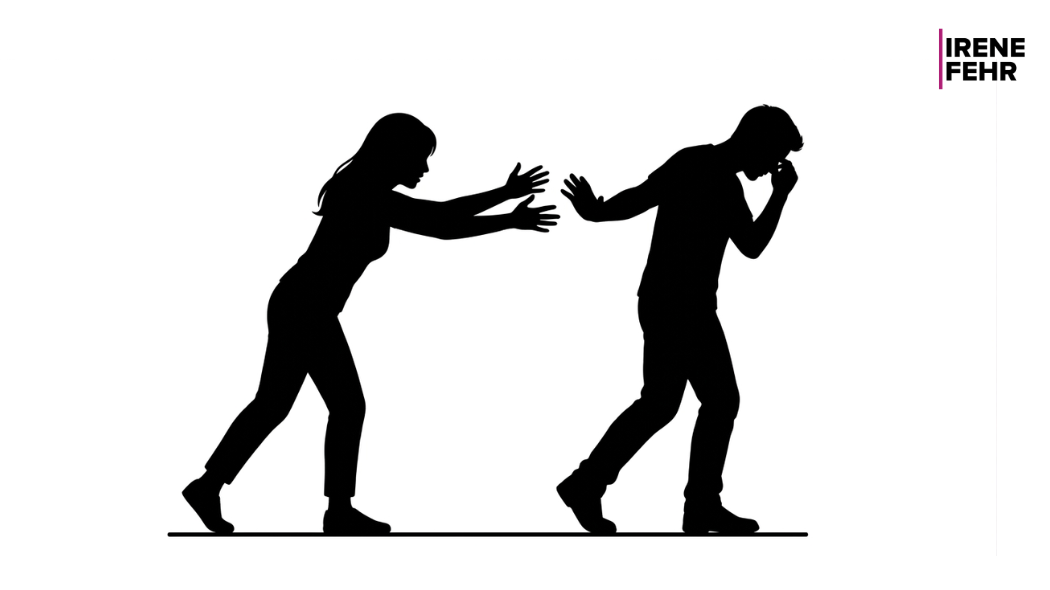
The thing is that without the fighter, there is no fleer. Without the fleer, there is no fighter. We powerfully influence each other and are equally part of the problem.
The questions to ask yourself:
What is your role in your negative cycle? What do you contribute to it?
Are you the Fighter (pursuer), Fleer (withdrawer), or the Frozen one?
And what is happening underneath your reaction?
This is not about controlling your reaction, but understand your reaction — and most importantly — what is the “ouch” underneath. That is what your repair conversation needs to be about.
3. Rebuild trust through vulnerability
Most couples have stopped showing each other their real emotional experience.
Instead they show:
criticism
shutdown
resentment
compliance
defensiveness
numbness
But vulnerability is what begins to rebuild intimacy:
naming your hurt
naming your fears
naming your longing
naming your desire
naming what feels hard
One of the biggest turning points for couples in my practice is learning how to stop protecting and start being real with each other again.
Yes, being vulnerable is an emotional risk, especially when you’ve repeatedly hurt each other. It helps being in the safe setting with someone holding you as you open up. That is where the repair needs to happen.
4. Address the resentments underneath the cycle
Sexless marriages rarely happen overnight.
They are usually years of accumulated hurt around:
rejection
pressure
shutdown
resentment
loneliness
unmet needs
self-betrayal
failed repair attempts
What often looks like anger or pressure is frequently a deeper experience of loneliness, grief, rejection, and longing for connection. Learn more about how men struggle in a sexless marriage and why many higher-desire partners become trapped in cycles of resentment and withdrawal.
Accumulated hurt without deep repair will create resentment.
Do your work to clean up your side of the street. Own your reactionary patterns and the resentments that you built up — and bring them up with each other. Vulnerably.
Because understanding the nervous system is only the beginning. Once couples recognize the cycle they are trapped in, they must begin repairing resentment, rebuilding trust, and restoring emotional safety. Learn How to Find Your Way Back to Each Other and Revive a Sexless Marriage for the practical steps involved.
It’s not about getting rid of resentments. It is about them guiding you to repairing deeper hurts. And healing begins when couples can finally hear each other underneath the defensiveness.
They communicate not to argue — but to learn and understand.
As I often tell couples: you have to feel what you’re hurting about, or the relationship implodes.
5. Remove pressure of sex to rebuild physical and emotional intimacy
For many couples, touch itself — even outside of sex — has become loaded.
A hug feels like a demand.
A kiss feels like pressure.
Touch feels dangerous because it’s tied to expectation.
To avoid the latter, couples often stop touching completely — only making the problem of closeness worse.
This is so because this is not just a physical problem. It has an emotional component to it — the pressure and the resentment.
Which is why couples need to temporarily remove the pressure for sex and instead work to rebuild trust through non-goal-oriented touch. Restore the joyfulness, ease and pleasure of touch to be able to move to the next stage to be sexual again.
I ask my clients to take sex off the table for the first three months of our work together, to help them learn new ways of engaging physically with each other, without the pressure of sex.
Slow touch.
Sensual touch.
Affection without agenda.
All of these help the nervous system relearn:
“I can relax here again.”
Prioritize daily connection as lovers
Many couples only relate as logistical partners:
parents
coworkers
managers of life
If you want to re-engage as lovers, lovers need actual lover time.
Not just occasional date nights. But daily time together where you focus on each other.
Moments of:
emotional connection
affection
playfulness
touch
curiosity
presence
As Sandra and Bill described it, the more their relationship was filled with moments they were lovers again, they created a “virtuous cycle” where emotional intimacy fed sex and sex fed emotional intimacy.
That’s how couples slowly find their way back to each other.
Not through pressure.
But through slow and steady steps back to safety, connection, and learning how to stay emotionally present together again.
The Real Shift from Battleground to Safety
The biggest shift happens when couples stop seeing each other as the problem — and start seeing the negative cycle.

Most couples trapped in these cycles are not lacking love.
They are lacking safety.
Underneath the fighting, avoiding, pursuing, withdrawing, criticism, shutdown, and numbness are usually two people who miss each other deeply…
…but no longer know how to safely reach for one another.
And when two people begin feeling safe enough to reveal the hurt underneath the protection, they stop fighting each other and start finding each other again.
If you have been trapped in the same negative cycle for years and are questioning whether the relationship can recover, read When to Walk Away From a Sexless Marriage to understand the factors that matter most before making that decision.
Related Reading from My Blog
If you're trying to revive a sexless marriage, it's important to understand the emotional experience on both sides:

Frequently Asked Questions / FAQ
Why do conversations about sex turn into fights?
Repeated cycles of hurt and disappointment train the nervous system to anticipate danger before intimacy conversations even begin.
Can a sexless marriage recover?
Yes. Many couples rebuild intimacy when they interrupt negative cycles and restore emotional and nervous system safety.
Why does touch feel loaded with pressure?
Because repeated disappointment or conflict can condition the nervous system to associate touch with obligation, rejection, pressure, or emotional risk.
What is a pursuer-withdrawer cycle?
A relationship dynamic where one partner pursues connection while the other withdraws to protect themselves from pressure, conflict, or overwhelm.
Can a sexless marriage recover?
Yes — especially when couples learn to interrupt the negative cycles driving emotional and nervous system disconnection that prevent them from being intimate.
Why do conversations about sex turn into fights?
Because repeated hurt trains the nervous system to anticipate danger, rejection, pressure, or shame before the conversation even begins.
Is low desire always the real problem?
Often no. Many couples are dealing with accumulated resentment, emotional disconnection, nervous system activation, and protective relationship patterns underneath the sexual symptoms. In these situations, low desire is a protective response.