
15 Signs an Unresolved Sexless Marriage Is Damaging Your Relationship
/
Most couples assume that a sexless marriage is about sex.
It isn't.
The lack of sex is often just the beginning of a string of subsequent problems: a growing cycle of pressure, disappointment, loneliness, resentment, and emotional disconnection.
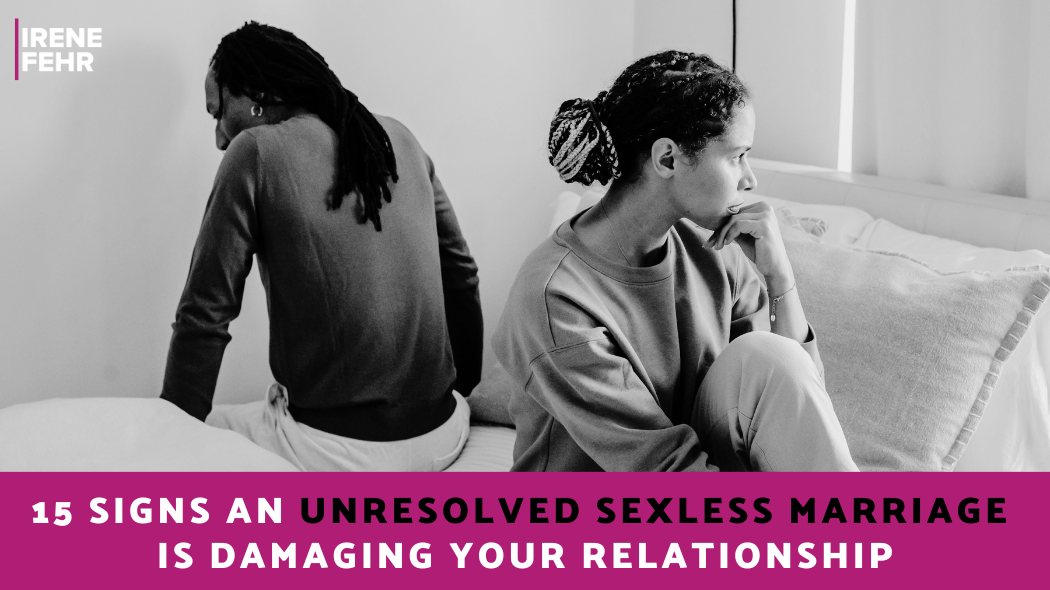
Over time, couples can become trapped in a downward relationship spiral where every conversation about sexual intimacy — even physical affection — creates more distance, every attempt to reconnect backfires, and both partners feel increasingly unseen and misunderstood.
Many people wait until they are considering separation before taking the impact of a sexless marriage seriously. By then, the relationship has often suffered years of accumulated hurt.
If you're wondering whether your relationship is being damaged by the lack of intimacy, these signs can help you understand where you are in the spiral—and what needs attention before the damage becomes harder to repair.
1. Sex Has Become a Recurring Argument
Sex isn't just absent. Whether you’re discussing frequency or lack of desire, sex is now one of the main sources of conflict in your relationship.
You find yourselves having the same conversation over and over:
"You only want sex."
"You never want sex."
"You don't understand me."
"You don't care about my needs."
The discussion is no longer about intimacy. It's become a battle over whose pain matters more and each conversation leaves both partners feeling more misunderstood than before.
If this sounds familiar, you'll likely relate to the dynamics described in my blog The Hidden Meaning Behind "You Only Want Sex"
2. Physical Affection Feels Risky
One of the earliest casualties of a sexless marriage is non-sexual touch.
A hug feels loaded.
Cuddling feels dangerous.
Even holding hands feels complicated.
The lower-desire partner may avoid affection because they're afraid it will send the message that they want sex when they don’t. The higher-desire partner may stop initiating affection because rejection has become too painful.
Eventually, even simple gestures of connection disappear, leaving both partners emotionally and physically starved.
3. You Feel Lonely While Sleeping Next to Each Other
Many couples assume loneliness only happens when you're alone. But one of the most painful experiences in a struggling sexless marriage is feeling lonely together.
You share a house.
You manage responsibilities.
You coordinate schedules.
But the sense of emotional connection has faded.
You may spend hours together while feeling completely disconnected from one another.
This kind of loneliness often hurts more than physical separation because the person you most want connection from feels emotionally unavailable.
4. Emotional Connection and Sexual Connection Become a Standoff
A common dynamic in sexless marriages sounds like this:
The woman says:
"I need emotional connection before I want sex."
The man says:
"I need sexual connection before I feel emotionally close."
Both are waiting for the other person to go first.
Both feel their needs are being ignored.
Both become increasingly frustrated.
The result is a stalemate where neither partner feels understood and neither gets what they need.
Over time, this dynamic creates more distance instead of more intimacy.
If this sounds familiar, you'll likely relate to the dynamics described in my blog post Can You Fix Emotional Intimacy Before Physical Intimacy in a Sexless Marriage?
5. Resentment Starts Showing Up Everywhere
At first, resentment may be directly related to sex.
Eventually, it spreads.
The argument is no longer about intimacy.
Now it's about:
Basic household chores
Parenting responsibilities
Finances
Planning vacations
Who does more for the family
The underlying hurt from the sexless relationship starts coloring everything else. And the hurt is far deeper than sex. It’s about
You don’t get me
You don’t care about me
I don’t matter to you
What appears to be an argument about dishes is actually years of unmet needs looking for an outlet of expression. Instead of requests rooted in needs and desires, your comments come out as criticism, combativeness and even snark.
6. Small Disagreements Escalate Quickly
Couples with a strong foundation of connection language can usually recover from conflict relatively easily because they focus on the underlying emotional hurt before they try to resolve the practical issue.
Couples trapped in a sexless marriage often cannot.
Small issues become major fights.
Minor frustrations trigger outsized reactions.
The emotional reserves that normally help couples navigate conflict have been depleted.
When physical intimacy disappears and couples are not able to connect over its disappearance, the relationship itself becomes a battleground, where couples lose one of the primary ways they repair and reconnect after disagreements.
7. The Husband Becomes Emotionally Unavailable
Many women in a sexless marriage complain that their husband has become emotionally distant.
He's still there.
He goes to work.
He helps with the kids.
He contributes to the household.
From the outside, he appears committed to the relationship.
But something has changed.
He no longer engages deeply in conversations. He seems less interested in sharing his feelings. He withdraws from emotional intimacy and becomes harder to reach.
What many couples don't realize is that for many men, sexual connection is not separate from emotional connection. Sex is often one of the primary ways they experience feeling wanted, accepted, valued, and desired by their partner. When she reaches for him, when she needs him physically, it is an expression of love for him.
When that connection is repeatedly unavailable, many men don't simply miss the physical experience of sex. They struggle emotionally without it because they lose access to a source of emotional nourishment that helps them feel connected in the relationship. Over time, they may protect themselves from disappointment by becoming emotionally guarded and struggling with emotional connection.
The result is a painful cycle:
She wants more emotional connection before she can open to sex.
He needs to feel sexually wanted before he can fully open emotionally.
Both partners end up waiting for the other to go first.
Neither gets what they need.
The relationship begins to feel increasingly lonely, even when both partners are trying their best to make it work.
This is one of the hidden ways a sexless marriage damages a relationship. The problem is no longer just the absence of sex. It is the gradual loss of emotional availability, vulnerability, and connection between partners.
What many couples miss is that emotional intimacy and physical intimacy don't operate independently.
When sexual connection disappears, emotional availability often changes too—not because one partner is broken, but because both forms of connection influence one another.
Learn more: Can You Fix Emotional Intimacy Before Physical Intimacy in a Sexless Marriage?

8. You Stop Being Curious About Each Other
Healthy relationships continue to evolve because the people in them continue to evolve.
When a relationship is struggling, partners may stop asking questions, showing interest, or trying to understand each other's experiences.
Assumptions replace curiosity.
Instead of discovering who your partner is becoming, you relate to who you believe they already are.
Over time, this lack of curiosity or openness to really see each other can create a sense of distance, even when you spend a great deal of time together.
9. You Are Living Parallel Lives
You function well as logistical partners.
You manage the home.
You raise children.
You handle responsibilities.
But your lives increasingly run alongside — rather than with — each other.
You feel more like roommates, co-parents, or business partners than romantic partners.
This is often one of the clearest indicators that the relationship spiral is accelerating.
10. You Feel Relieved When Your Partner Isn't Around
A healthy relationship creates a sense of ease and connection — and desire to be around each other.
In a struggling relationship, distance can feel like relief.
You may notice yourself enjoying work trips, staying busy, or finding reasons to avoid time together.
The absence of tension feels better than being in the tension.
That's an important signal that the relationship needs attention.
11. Rejection and Tension Are Causing Self-Doubt
Repeated rejection doesn't just affect desire.
It affects self-worth.
The higher-desire partner may begin questioning:
Am I attractive?
Am I lovable?
Am I wanted?
The lower-desire partner may begin questioning:
What's wrong with me?
Why don't I want sex?
Why can't I give my partner what they need?
Or worse, the lower-desire partner starts calculating how to push the higher-desire partner away.
Both partners suffer.
Both often carry shame.
Both feel increasingly alone.
12. Thoughts of Leaving Appear More Frequently
Not every couple considering separation gets divorced.
But many couples begin imagining life apart long before they talk about it openly.
The thoughts may be subtle:
"Maybe we'd both be happier."
"I can't do this forever."
"Is this all there is?"
You might look at other couples with envy, wondering what they have that you don’t that makes it work for them.
These thoughts often emerge when hope starts giving way to resignation.
13. Contempt Is Beginning to Replace Compassion
According to John Gottman research, contempt is one of the strongest predictors of relationship breakdown.
Instead of curiosity, there is criticism.
Instead of empathy, there is judgment.
Instead of understanding, there is blame.
The relationship shifts from "We're facing a problem together" to "You are the problem."
When couples enter this stage, repair becomes more difficult—because more hurt is inflicted on each other.
14. You Fear the Future of the Relationship
Perhaps the most significant sign is this:
You are no longer worried about the sex.
You are worried about the marriage.
You wonder:
Will we ever find our way back?
Are we becoming strangers?
Is our relationship slowly deteriorating?
Do I even like being with my partner?
These fears are often signals that the problem is larger than intimacy alone.
The sexless marriage has started affecting the overall health of the relationship.
15. One or Both of You Have Given Up Trying
The higher-desire partner stops initiating.
Neither person brings up physical intimacy or initiates touch.
This may feel like peace.
It's actually often resignation.
The issue hasn't been solved.
It's simply been pushed underground.
The silence can create a false sense of stability while emotional distance continues to grow. Many couples mistakenly interpret this as acceptance. In reality, it can be a sign of emotional withdrawal.
The relationship begins operating in maintenance or stalling mode rather than growth mode.
The Real Damage of a Sexless Marriage
The greatest damage of a sexless marriage isn't the absence of sex.
It's this negative cycle of pressure, misunderstanding, loneliness, resentment, and emotional disconnection that develops around it.
Many couples focus on increasing the frequency of sex while missing the deeper issue: the relationship itself is becoming less safe, less connected, and less resilient.
While other couples focus on couples therapy and emotional safety while missing out on the most crucial link between physical and emotional intimacy: that they cannot be separated out.
How Far Has Your Relationship Spiral Progressed?
Not every sexless marriage is in crisis.
Some couples are experiencing early warning signs.
Others have entered a deeper cycle of resentment, emotional withdrawal, and deterioration.
How much damage has already occurred?
If you're wondering where your relationship falls on that spectrum, take the Desire Under Pressure™ Relationship Spiral Assessment.
The assessment helps you identify how much the lack of intimacy is affecting your connection, communication, emotional safety, and long-term relationship health—and what stage of deterioration your relationship may currently be experiencing.
Take the Relationship Spiral Assessment and discover where you are on the path from compromise to contempt before the damage becomes harder to reverse.
